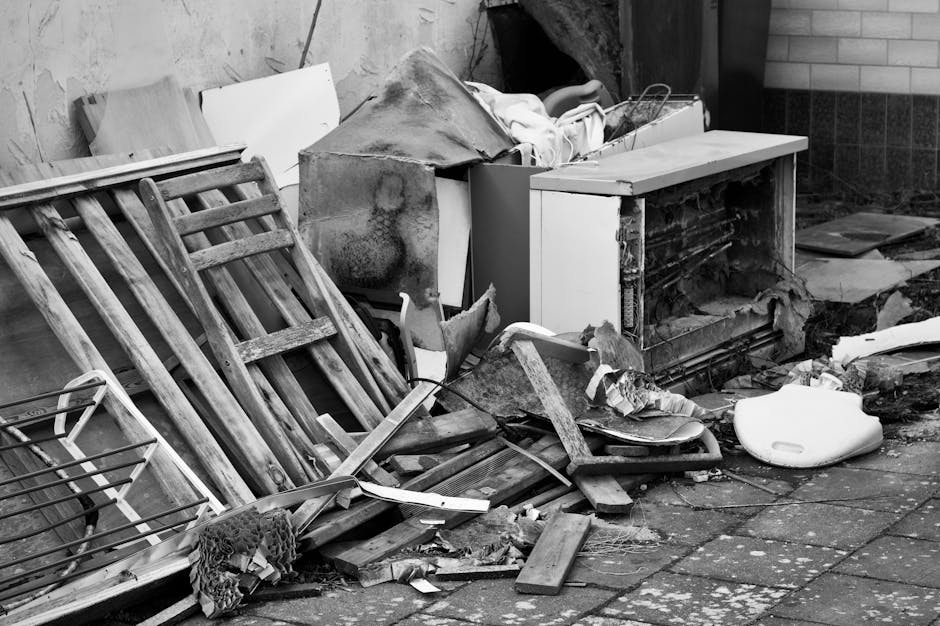
Clearing bulky DIY waste after Southfields home refurb
If you have just finished a home refurb in Southfields, you probably know the feeling: the room looks better, but the hallway is suddenly full of timber offcuts, broken tiles, old skirting, empty plasterboard bags, and a dusty pile of bulky bits that never seem to shrink. Clearing bulky DIY waste after Southfields home refurb is one of those jobs that sounds straightforward until you are the one lifting awkward panels down the stairs at 7pm, with a van booked for tomorrow and a neighbour trying to squeeze past. Not ideal.
This guide breaks down what the job actually involves, how to do it safely, what tends to trip people up, and when it makes sense to bring in help. You will also find practical tips for sorting mixed refurb waste, avoiding unnecessary trips to the tip, and choosing a clearance method that fits real life rather than some perfect version of it.
Key takeaway: bulky refurbishment waste is easiest to manage when you sort it early, protect access routes, and choose a removal method that matches the type and volume of material. A little planning saves a lot of lifting.
Table of Contents
- Why clearing bulky DIY waste matters
- How the clearance process works
- Key benefits and practical advantages
- Who this is for and when it makes sense
- Step-by-step guidance
- Expert tips for better results
- Common mistakes to avoid
- Tools, resources and recommendations
- Law, compliance, standards and best practice
- Options, methods, and comparison table
- Case study or real-world example
- Practical checklist
- Conclusion
- Frequently asked questions
Why Clearing bulky DIY waste after Southfields home refurb Matters
Refurbishment waste has a habit of spreading. One moment the materials are stacked neatly in a corner; the next, they are underfoot, in the way of paint tins, and somehow dusting every surface again. The practical issue is obvious, but there is more to it than convenience.
First, bulky DIY waste can quickly become a safety problem. Sheets of plasterboard, broken cabinetry, lengths of timber, and old bathroom fixtures are awkward to move and easy to trip over. A small scrape is annoying. A dropped board on a toe or a strained back is a much bigger deal.
Second, the waste itself can block finishing work. If you still need decorators, floor fitters, or a final clean, clutter slows everything down. People underestimate this part all the time. In our experience, a tidy site makes the last phase of a refurb feel calmer, cheaper, and much less chaotic.
Third, not every material can go in the same place. Mixed waste from home refurbishments often includes wood, metal, ceramics, packaging, old fixtures, and sometimes items that need special handling. The more mixed it becomes, the less efficient removal becomes. That is where a bit of sorting pays off.
Southfields homes often come with narrow access, shared entrances, terraced layouts, or limited front space. That means bulky waste can be harder to shift than it looks in a photo. A plan matters. A lot.
If your refurb includes leftover furniture, damaged shelving, or old household items as well as building debris, services like home clearance or house clearance can sometimes help you deal with the broader clean-out around the project, not just the rubble.
How Clearing bulky DIY waste after Southfields home refurb Works
The process is usually simpler than people fear, but it still works best in stages. Think of it less as one big "clear everything" job and more as a sequence of small decisions.
1. Identify what needs to go
Walk through the property and split waste into broad groups. For example: wood, plasterboard, metal, packaging, old fittings, rubble, and reusable items. You do not need a perfect taxonomy here. Just enough separation to avoid a chaotic heap.
2. Remove hazardous or awkward items from the mix
Check for anything that should not be casually bundled with general DIY waste. Paint tins with leftover liquid, solvents, adhesives, sealants, fluorescent tubes, and similar materials may need special care. If you are unsure, pause and treat it cautiously rather than dumping it in with the rest. That tiny pause can prevent a bigger headache later.
3. Protect the route out of the property
Before moving heavy waste, clear hallways, lift loose rugs, and protect floors if needed. It sounds basic, but it is the sort of thing that gets forgotten when everyone is keen to finish. A scratched staircase is a miserable way to celebrate a new bathroom.
4. Decide whether you are loading, bagging, or stacking
Some waste is best bagged, some should be stacked flat, and some should stay as larger pieces for safer lifting. Plasterboard, for instance, is often easier to handle when kept dry and grouped. Broken ceramic tiles should be contained securely so they do not rattle loose and make a mess on the way out.
5. Choose the removal method
Depending on the amount and type of waste, you may use a van collection, a dedicated builder-style clearance, or a broader waste removal service. If the work involved a full kitchen strip-out, damaged cupboards, or heavy mixed debris, builders waste clearance is the most obvious fit. For mixed leftover items, waste removal may be the more flexible option.
6. Load, sweep, and check the space
Good clearance ends with a final sweep, not just with things leaving the building. That last check matters. It is when you catch a nail, a shard of tile, or the one screw that would have found your foot later. Annoying, but useful.
Key Benefits and Practical Advantages
There is a very real difference between "the refurb is done" and "the refurb is done and the waste is gone." The second one feels properly finished.
- Safer rooms and access routes: fewer trip hazards, less dust spread, and less chance of accidental damage during the final stages.
- Faster project completion: decorators, cleaners, and fitters can work without constantly moving piles of debris first.
- Cleaner visual result: when the rubbish leaves, the new space finally looks like the upgrade you paid for.
- Better sorting for recycling: separating materials early makes it easier to direct reusable or recyclable items where they belong.
- Less DIY fatigue: let's face it, after a refurb most people are done with the word "project" for a while.
- Reduced strain on family and neighbours: bulky waste carried through shared entrances or pavements becomes a nuisance very quickly.
Another benefit people overlook is storage relief. Leftover boards, doors, old furniture, and half-used materials can sit for weeks if no one makes a decision. Once you remove the waste, you get the space back. That alone can feel strangely satisfying, especially in smaller Southfields homes where every square metre counts.
For any project that has bled into spare rooms, the loft, or garage, it can also help to look at related services such as loft clearance or garage clearance if the refurb has triggered a wider declutter.
Who This Is For and When It Makes Sense
This kind of clearance is relevant to more people than you might think. It is not just for full renovations or trade jobs.
Homeowners doing a room refresh
If you have ripped out an old bathroom, replaced a kitchen worktop, or removed built-ins, you will likely end up with bulky waste that is awkward to move in a car and not suitable for regular household bins. That is a common point where people stop and think, "Right, now what?"
Landlords between tenancies
End-of-tenancy refurb work often leaves a mixed pile of offcuts, damaged fixtures, and leftover furniture. If the property is a flat, the access and disposal logistics can be especially fiddly, which is why flat clearance may be relevant alongside the refurbishment clean-up.
DIY enthusiasts handling their own project
If you enjoy doing the work yourself, fair enough. A lot of people do. But the clearance stage is where enthusiasm often starts to wobble. Heavy lifting, awkward dimensions, and dust everywhere can turn a satisfying project into a miserable Sunday.
Families who need the space back quickly
Some refurb jobs happen around real life: kids, work, school bags, pets, and all the ordinary interruptions. In those cases, fast and tidy removal is often the difference between a house that is merely busy and one that feels unmanageable.
People renovating in phases
If your refurb is being done in stages, waste can accumulate over weeks. That can make the place feel unfinished for far too long. Clearing it as you go, or at least at the end of each stage, keeps momentum up.
Step-by-Step Guidance
Here is a practical, no-nonsense way to tackle bulky DIY waste after a Southfields home refurb.
- Do a room-by-room sweep. Make a quick inventory of what is left behind. Broken, reusable, recyclable, and hazardous items should be treated differently.
- Measure the awkward pieces. Large panels, doors, or worktops often need planning for angles, stair turns, and doorway widths. This tiny bit of prep avoids the classic "we thought it would fit" moment.
- Create a staging area. Put waste in one location if possible, away from walkways. A hallway stack is usually a bad idea unless you enjoy limbo practice.
- Separate by material. Keep timber apart from rubble, and keep any potentially reusable fixtures apart from true waste. Reuse is not always possible, but it is worth checking.
- Bag or bundle smaller debris. Nails, broken tile, plaster chunks, and scraps should be contained securely. This makes loading safer and tidier.
- Check access and parking. In Southfields, access can be tight. A quick look at where the vehicle can safely stop saves time on collection day.
- Confirm the collection method. Choose whether you need a one-off bulky waste removal or a broader clear-out. If the refurb waste is mixed with old furnishings, furniture disposal may also be useful.
- Do a final sweep. Remove dust, loose fixings, and small fragments. This is the bit everyone wants to skip. Do not.
If your refurb has created a lot of mixed debris, a service that understands construction-style waste is often more efficient than trying to split everything into separate trips yourself. That is especially true if you have leftover boards, packaging, and bits of timber from multiple rooms.
Expert Tips for Better Results
These are the small habits that make the whole process smoother.
- Take photos before you start sorting. It helps you stay realistic about volume. People often underestimate how much is actually there.
- Keep dry materials dry. Wet plasterboard, soaked cardboard, and rain-hit timber are harder to handle and may become more cumbersome than they need to be.
- Label stacks if you are working over a few days. A quick marker note on a bag or pile sounds trivial, but it stops confusion later.
- Plan for the final two percent. The last bits always take longer than you expect. Always.
- Use gloves, sturdy shoes, and sensible lifting. Nothing glamorous, just practical. A tidy site is not worth an injury.
- Think about the clean finish, not just disposal. If the work has generated dust on stairs or skirting, a wider home clearance approach can help reset the space properly.
One useful habit: sort while the work is still fresh. If you wait until every room is full, the job becomes mentally heavier. A small tidy-up after each major stage keeps momentum. Boring, yes. Effective, also yes.
Common Mistakes to Avoid
Most clearance problems come from rushing, not from bad intent. Still, the same mistakes show up again and again.
Mixing everything together
When rubble, timber, packaging, and fixtures are all piled into one heap, handling becomes slower and less efficient. It can also make recycling harder. A little separation at the beginning saves a lot of grief later.
Ignoring weight and size
Large pieces are not just bulky; they can be genuinely hard to manoeuvre. A door, bath panel, or worktop can look manageable until you reach the stair turn. Then reality arrives.
Forgetting access constraints
Southfields streets and shared entrances can add friction. If you do not check access in advance, you may find yourself carrying waste farther than planned, which is tiring and a bit irritating when the kettle is calling.
Underestimating dust and mess
Plaster dust gets everywhere. Broken plasterboard sheds crumbs, and tile fragments can continue to spread if they are not contained well. Plan for a cleanup, not just a lift-out.
Leaving clearance to the very end
If you delay removal until after the entire refurb, the site can feel congested and stressful. In some cases, that delay also slows the final fitting or decorating work.
Trying to handle unsafe materials casually
Paint residues, adhesives, and other treatment products deserve more caution than an ordinary bag of rubbish. If there is any doubt, stop and assess. Better to pause than to improvise.
Tools, Resources and Recommendations
You do not need a shed full of specialist gear, but the right basics help a lot.
- Heavy-duty rubble sacks or refuse sacks: useful for smaller fragments and dusty offcuts.
- Gloves: ideally tough enough for splinters, sharp edges, and rough surfaces.
- Dust sheets or floor protection: helpful when moving waste through finished areas.
- Basic hand tools: pry bars, screwdrivers, and a hammer are often needed for disassembly or loosening fixings.
- Trolley or sack barrow: useful for heavier items if access allows.
- Mask and eye protection: sensible when dust or tiny chips are flying around.
For homeowners who want a more hands-off route, it can help to compare removal options with the service pages that match your situation. If the refurb also involved old cabinets, wardrobes, or damaged chairs, furniture clearance may fit better than a generic waste-only approach. If you are mainly dealing with non-furniture clutter, waste removal may be the cleaner all-round option.
And if you are still weighing up costs and scope, take a look at pricing and quotes. Even if you do not book immediately, it gives a useful sense of how the job may be assessed.
Law, Compliance, Standards and Best Practice
Without getting bogged down in legal jargon, there are a few sensible UK principles to keep in mind when dealing with DIY waste from a home refurb.
First, waste should be handled responsibly and not left where it can create a nuisance, block access, or create a hazard. That sounds obvious, but it is still where a lot of problems begin. Shared areas, pavements, and driveways should remain safe and usable wherever possible.
Second, different waste types should be treated appropriately. Mixed refurbishment waste is often not suitable for ordinary household disposal. Items that may be contaminated, sharp, dusty, or chemically treated deserve extra caution. If you are unsure, it is better to ask than to assume.
Third, good practice usually means using a provider or method that prioritises safe handling, transport, and appropriate disposal or recycling. A professional approach should not be a mystery box. You should feel clear about what is being taken, how access will work, and whether any special items need separate treatment.
It is also sensible to check company policies that relate to safety and trust. Pages such as health and safety policy, insurance and safety, and recycling and sustainability can give you a better feel for how a business approaches the job. Those details matter. Not glamorous, perhaps, but they matter.
For basic customer assurance, it is also worth reading terms and conditions and about us so you understand the service philosophy and expectations before booking.
Options, Methods, or Comparison Table
There is no single best method for every refurb. The right choice depends on volume, access, speed, and how mixed the waste is. Here is a simple comparison to help you think it through.
| Option | Best for | Pros | Watch-outs |
|---|---|---|---|
| Self-loading and multiple trips | Small volumes, patient DIYers | Low immediate spend, full control | Time-consuming, physically tiring, easy to underestimate volume |
| Skip-style approach | Longer projects with steady waste output | Useful if waste builds over time | Needs space, access planning, and sensible sorting |
| Professional bulky waste clearance | Mixed, heavy, awkward, or time-sensitive waste | Fast, less lifting, easier for tight access | Cost depends on volume and material mix |
| Combined furniture and waste removal | Refurbs that also include old fixtures or furniture | Reduces multiple arrangements, efficient single visit | May need clearer item list upfront |
If the job spans several rooms or has grown beyond a straightforward rubbish pile, combining services often makes sense. For example, a kitchen refurb may create waste, old units, and broken chairs all at once. In that case, a broader service route can be far less stressful than splitting everything apart.
Case Study or Real-World Example
Here is a realistic scenario. A homeowner in Southfields has finished a small kitchen refurb in a two-storey terrace. The work has left a mix of cabinet carcasses, laminate offcuts, broken tiles, a sink, a few bags of debris, and an old dining chair that was pushed into the corner "just for now."
At first glance, the pile looks manageable. But once they start measuring the larger pieces, it becomes clear the stair turn is tight and the hallway is narrow. They decide to sort the load into flat timber, rubble, metal, and household items. The chair and a damaged side table are separated for furniture disposal. The heavier mixed waste is kept together for collection.
The most useful change was not the loading method itself. It was the decision to stage everything near the front room, protect the floor, and book a removal option that matched the reality of the waste. The homeowner avoided three car trips, cut down on mess through the house, and got the kitchen ready for a proper clean by the evening. Nothing magical. Just sensible sequencing.
That is often how these jobs go. The win comes from making the process slightly less chaotic. Not perfect, just manageable.
Practical Checklist
Use this before collection day or before you start shifting anything heavy.
- Walk the property and identify every pile of DIY waste.
- Separate rubble, timber, metal, fixtures, and reusable items.
- Check for liquids, chemicals, or other items needing extra care.
- Measure large pieces and note awkward corners or stair turns.
- Protect floors, stairs, and walls where needed.
- Clear access routes and make sure doors can open fully.
- Confirm where the waste will be staged.
- Have gloves, sturdy shoes, and dust protection ready.
- Decide whether furniture, household clutter, or garden material needs separate handling too.
- Do a final sweep for nails, screws, glass, and sharp fragments.
If you are still deciding on the best next step, it can help to speak directly with the team through the contact us page. A short conversation often clears up more than a long evening of guessing.
Conclusion
Clearing bulky DIY waste after Southfields home refurb is rarely just about "taking rubbish away." It is about finishing the job properly, protecting your space, and avoiding the low-level stress that comes from living around a half-finished project. The better you sort, stage, and plan the waste, the easier the whole refurb feels at the end.
Whether you are dealing with one bathroom rip-out or a wider home refresh, the right clearance approach will save time, reduce mess, and make the final result feel properly complete. And honestly, that final empty room has a very satisfying quiet to it. You notice the echo. The light changes. The whole place breathes a bit easier.
Get a free quote today and see how much you can save.
When the dust has settled and the last bulky bits are gone, you are left with the part that matters most: a home that feels ready for normal life again.
Frequently Asked Questions
What counts as bulky DIY waste after a home refurb?
Bulky DIY waste usually includes large or awkward items such as timber offcuts, doors, cabinets, old worktops, broken tiles, plasterboard, bathroom fixtures, and heavy packaging. If it is hard to carry, hard to stack, or too much for normal household disposal, it probably belongs in this category.
Can I mix all refurbishment waste together?
You can physically mix it, but it is usually not the best idea. Mixed waste is slower to handle and can be harder to recycle. Separating timber, rubble, metal, and reusable items makes removal easier and often cleaner.
Do I need a specialist service for DIY waste?
Not always, but if your project includes heavy, mixed, or awkward materials, a service designed for refurbishment debris is often the most practical choice. For lighter or broader household clutter, a wider waste removal or home clearance route may be better.
How do I prepare my Southfields home before collection?
Clear access routes, protect flooring, group waste into one or two staging areas, and separate anything that is reusable or needs special handling. A few minutes of preparation can make collection noticeably smoother.
What should I do with old furniture after a refurb?
If the refurb has left you with unwanted chairs, cupboards, tables, or wardrobes, consider furniture disposal or furniture clearance alongside the DIY waste. That keeps the job from turning into two separate problems.
Is plasterboard handled differently from general rubble?
Often, yes. Plasterboard can require separate handling depending on how it is mixed and whether it is clean and dry. It is sensible to keep it apart from general rubble and other debris until you know the best disposal route.
How do I avoid damaging floors and walls while moving waste out?
Use floor protection, move smaller loads instead of overfilling bags, and keep awkward items under control rather than dragging them. This sounds obvious, but in a busy refurb it is exactly the sort of thing people forget at the end of a long day.
What if my waste pile includes garden or garage items too?
That happens a lot, especially when a project spirals into a wider clear-out. In that case, related services like garden clearance or garage clearance may be worth considering so everything is handled in one sweep.
Can I book a clearance if the property is a flat?
Yes, but access matters more in flats. Stairways, communal entrances, lift restrictions, and parking can all affect how the job is done. If that is your situation, flat clearance is a useful starting point.
How do I know whether a quote will be fair?
A fair quote should reflect the volume, weight, access difficulty, and waste type. If you want to compare your options properly, the pricing and quotes page is a sensible place to begin. It helps set expectations before you commit.
What if I only have a small amount of bulky waste?
Even a small pile can be awkward if it includes heavy or sharp items. A few offcuts and one broken cabinet may not look like much, but they can still be a pain to move safely. If you are unsure, ask for advice rather than trying to force it into a normal bin solution.
Why is Southfields access such a common issue?
Because many local homes have compact layouts, limited front space, or shared access. A clearance that looks straightforward on paper can become fiddly once you factor in stairs, parked cars, and narrow hallways. A little local planning goes a long way.